Information on all horse breeds from A to Z

male Zebra + female horse -> Zorse So, a zorse is a cross between a zebra stallion and a horse mare. The zorse takes the color or dominant color gene of the mare and the zebra sire gives it stripes. Zebra stallions usually must be raised in a special environment to induce them to breed horse mares.
A hebra is a cross between a zebra mare and a horse stallion – the rarest of equine inter-species breedings. Horse stallions as a general rule do not like to breed zebra mares.
A zony is a cross between a zebra stallion and a Shetland Pony mare.
A Zonkey (also known as zebrass, zebronkey, zeedonk, zedonk, zebadonk, zenkey, donbra, donbri, donkra, zebrinny, zebrula, or debra) is a cross between a zebra stallion and a donkey jennet (also called a jenny).
"Zonkey" is not the technically correct name for such a cross. The most commonly accepted terms are zebrinny, zebrula, and zedonk.
A zebrinny is the offspring of a male zebra and a female ass, called a jenny; a zebrula is the offspring of a male zebra and a female horse; a zedonk is the offspring of any zebra and any donkey.
The zonkey takes the color or dominant color gene of the jennet (also known as a jenny) and the zebra sire gives it stripes.
The zonkey is generally more easily bred for than the zorse as the donkey and zebra both communicate behaviorally using very similar language, but horse language is somewhat different than the zebra's.
A group of horses is a herd and a group of zebras is a zeal.
What is a Zorse?
A zorse or zebrula is a zebroid, specifically the offspring of a zebra stallion and a horse mare.
Like most other hybrids, the zorse is infertile.
An interspecific hybrid is created when a male and female from two closely-related species (usually from the same genus) mate and produce offspring. This offspring shares characteristics with both its parents. Normally hybrids are sterile: this prevents genetic characteristics from passing between the two gene pools and thus explains why they are two distinct species. This sterility is sometimes due to a difference in the number of chromosomes: for example, donkeys have 62 chromosomes, horses have 64, mules have 63, and the zebra has between 32 and 46 (depending on species). Rarely, however, a fertile hybrid will appear.
A hybrid has a number of chromosomes somewhere in between. The chromosome difference makes female hybrids poorly fertile and male hybrids sterile due to a phenomenon called Haldane's Rule. The difference in chromosome number is most likely due to horses having 2 longer chromosomes that contain similar gene content to 4 zebra chromosomes.
The rarity of zebra hinnies and hebras indicates that the smaller number of chromosomes must generally be on the male side if a viable hybrid is to be produced. Before this comes into account, a successful mating needs to be accomplished in the first place.
Courtship in horses involves the mare kicking at the stallion's head for some time before allowing him to mount, and as this behavior is stronger in wild equids than in domestic horses, it is difficult enough to get a horse stallion to mate and not be put off by the rough behavior of the non-horse mare. Thus the zorse is much more common than the hebra. In fact, there are only a few known hebra hybrids living.
Many hybrids result from animal husbandry by humans, however interspecific mating is not unknown in the wild. For example, DNA tests have confirmed that a bear shot to death by a hunter in Canada's Northwest Territory was a grizzly/polar bear hybrid. This confirmed scientists' hypothesis that a hybrid zone where such births naturally occur might exist where the two species' habitats overlap.
The zorse is a strong animal with traces from both its parents. James Cossar Ewart crossed a zebra stallion with horse and pony mares in order to investigate the theory of telegony, or paternal impression. Cossar Ewart used Arabian mares. Similar experiments were carried out by the US Government and reported in "Genetics in Relation to Agriculture" by E.B. Babcock and R.E. Clausen, and in "The Science of Life" by H.G. Wells, J. Huxley and G.P. Wells (c.1929).
Zorses are also bred in Africa and used for trekking on Mount Kenya.
Coloration of the Zorse
It is common for people to think a hebra mating produces the solid white patches, such on the animal pictured above, because this animal is one of the few hebras in existance and this picture is widely circulated. Since most people haven't seen another hebra picture, they think it must be the horse stallion - zebra mare mating that produces this color pattern. However, this is not the case.
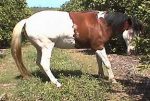
Both Zorses and hebras combine the zebra striping overlaid on colored areas of the hybrid's coat. Zorses are most often bred using solid color horses. If the horse parent is piebald (black and white) or skewbald (some other color and white) (these are known in the USA as paint/pinto) the zorse may inherit the dominant de-pigmentation genes for white patches.
It is understood that Tobiano (the most common white modifier found in the horse) directly interacts with the Zorse coat to give the white markings. Only the non-depigmented areas will have Zebra striping, resulting in a zorse with white patches and striped patches.
If the mare has a pattern, such as pinto spotting or Appy spots, the zorse often will also.
This effect is seen in the zebroid Eclyse (a hebra rather than a zorse - pictured above) born in Stukenbrock, Germany in 2007 to a zebra mare called Eclipse and a stallion called Ulysses.
Breeders avoid using gray mares because the zorse can inherit the graying gene and lose all his stripes in a few years! Even if they lose their stripes, you can still see the stripes on the skin.
Temperament of the Zorse

The temperament of a zorse, hebra, zony, or zonkey is more like that of the donkey, than the horse. This is not an animal for a novice to handle. Zebras are quite strong for their size and very aggressive in the wild. They possess a highly developed flight or fight survival response to anythng they perceive as dangerous or frightening. The first defense in this psychology is to run away from danger. But, if they can't escape, the next defense is to fight for their lives, and they will. In the wild, zebras win at least as often as the predators who hunt them. This instinct is hundreds of times stronger in a wild animal than a domestic breed.
For example, our common dog breeds are descended from wolves and scientists estimate it took as much as 100 generations for some breeds to become the docile, trusting beasts we keep in our homes today. It takes a minimum of three generations for these wild instincts to begin to dim, and often much longer, before we consider their intensity to be fully domestic. At this time, most zorse and zeadonk crosses are F1s, meaning one parent is a full blood zebra, although there are some on the market that are as much as F17s. Of course an F17 would be a lot more predictible than an F1. You get the idea.These animals are definitely more flighty and stubborn than horses and they can be quite aggressive, so you should have a great deal of horse experience before deciding to get one.
It helps a lot if the mare has a good disposition. Generally, the offspring inherits the striping pattern and some of the conformation of the zebra sire with the size, colouration, and temperament of the domestic mare.You will still have to work harder than with a horse to overcome the natural wild instincts of the zebra, but it helps if the mare doesn't have a nasty dispostion, too.
Males should be gelded as early as a few months old to prevent dangerous studdy behaviour.
Why the Zorse was originally bred
The crosses of zebras with horses, donkeys and ponies were originally done in England and Africa to try to produce a domestic horselike animal that was resistant to diseases spread by the tse tse fly in Africa. Zebras have natural resistance, where domestic donkeys and horses do not.
The experimental crosses were actually becoming popular until early in the 20th century when the auto displaced the horse and mule. At that point cross-breeding was largely abandoned. A revival of interest came in the early 1990s, with just about every breed of domestic horse imaginable is being tried.
Mares of quality, especially Quarter horses and American Paint horses, produce some very beautiful zorses that have a good working attitude.
Longevity of Zorses
Zorses tend to be very hardy and live into their 30s with good care. Their temperaments are generally similar to those of their mothers, but like the zebra they do have a strong flight response. Because of this it's best for a first time hybrid owner to get a zedonk instead. When a zedonk startles he freezes up like a donkey rather than bolting blindly like a horse or zebra.


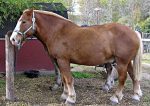
The Abyssinian horse, also known as the Gala, is a light horse breed that originated in Ethiopia.
Despite its small size, the Abyssinian has been bred for strength and for the ability to live and work in mountainous areas. This breed is used both as a riding horse and a pack horse.
They generally stand around 13.3 hands high and show a wide variability in coloration, size and conformation.

The bloodlines of this breed have been diluted with many other breeds, so the animals come in a variety of different shapes and colors. Although all horses require a great deal of upkeep, the Abyssinian is one of the most high maintenance as far as grooming needs. Those who choose to keep this breed of horse might find that they have less time to spend socialising or playing online games at cheekybingo.com, as Abyssinian's require more grooming care than some other horse breeds. This is largely due to their uncommon genetic make up, which means they have swirly hair which requires greater care in grooming.
The breed's coat is generally short and harsh, but unique in that it displays many swirled 'rosettes' and ridges, and also generally grows a moustache around its nose. Because the hair grows in so many directions, it can be hard to brush, and great care must be taken to keep the coat clean and free of dirt. Many breeders, especially those in England, have worked to improve this rosette pattern.
Most Abyssinians are green eyed, due to an uncommon gene not often found in horses.
The Abyssinian has spread from Ethiopia along the coastline of the Red Sea, where it is a common breed. The breed was first exported to England, where they are a popular horse breed, in 1861.
The American Cream Draft Horse is the only draft horse breed developed in the United States. The breed originated in Iowa in the early 1900s, and it has always been rare. It is now critically endangered.
The Abtenauer is a rare draft horse breed. It is the smallest variant of the Noriker horse, but is very strong despite its small size. Their population numbers are very low and the breed is critically endangered.
The Abaco Barb is an endangered strain of the Spanish Barb horse breed that resides on the Island of Abaco in the Bahamas. By 2009, only seven Abaco Barb horses remained.
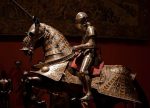
The destrier is the best-known war horse of the medieval era. It carried knights in battles, tournaments, and jousts. It was described by contemporary sources as the Great Horse, due to its size and reputation.
A courser is a swift and strong horse, frequently used during the Middle Ages as a warhorse. It was ridden by knights and men-at-arms.
The Colonial Spanish Horse is a foundation type of horse descended from the original Iberian horse stock brought from Spain to the Americas. The ancient form of the breed was once called the Jennet or Spanish Barb. The term encompasses many strains or breeds now found primarily in North America. Its extinction status is considered critical and the horses are registered by several authorities.
Cob is a term used to describe a type of horse that is small, usually of a stout build, with strong bones, large joints, and steady disposition. The term refers to a body type of horse rather than a specific breed. Historically, in the United Kingdom and, to a lesser extent, the eastern United States, it was also a word used to describe a common horse used for everyday riding.
The Baroque horse is a term used to generally describe the type of agile but strong-bodied descendants of Horses in the Middle Ages.
AQPS ("Autre Que Pur-Sang"), translated as "Other than thoroughbred", is a general term used in France to refer to horses not listed as Thoroughbreds.
Page 1 of 2
Shopping Menu
- UnAdvertised Specials!
- On Sale!
- Close Outs
- Fringed Leather Jackets
- Fringed Leather Skirts
- Horse Dresses
- Horse T-Shirts
- Other Riding Gear
- Horse Gear
- Horse Jewelry
- Belt Buckles
- Bolo Ties
- Horse Bedding (for People)
- Horse Bookends
- Horse Books
- Horse Calendars
- Horse Checks
- Horse Clocks
- Horse Collectible Plates
- Horse Cups, Mugs & Steins
- Horse DVDs & VHS
- Horse Figurines / Statues
- Horse Furniture
- Horse Knives
- Horse Lamps / Lampshades
- Horse Magazines
- Horse Mirrors
- Horse Mousepads
- Horse Picture Frames
- Horse Pillows
- Horse Tableware
- Horse Trinket Boxes
- Horse Trophies & Ribbons
- Horse Posters
- Limited Edition Horse Art
- Original Horse Art
- Horse Wall Hangings
Login
Horse Trivia
A full grown horse weighing 1000 pounds (455kg) contains approximately 13.2 gallons of blood.